A roof does more than keep rain outside. Beneath the roofing surface, the attic has its own air conditions that can change throughout the year. On a hot afternoon, the space may hold a large amount of heat. Cooler weather can bring different moisture-related concerns.
This is why roof ventilation matters. It creates controlled openings that help air move through the attic instead of allowing warm or damp air to remain trapped. The interesting part is that homes do not all use the same ventilation design. Some rely on openings built into the roof, while others use vents placed at the gable or powered equipment.
Modern Roofing USA looks at ventilation as part of the complete roof system, since the location and combination of vents can affect how air travels through the attic.
What Is Roof Ventilation Actually Doing?
Roof ventilation creates a route for air movement. Most systems have two basic jobs: bring outdoor air into the attic and allow indoor attic air to leave.
Why Are Two Air Paths Important?
Think of an attic as a space that needs an entry and an exit for air. Intake vents bring fresh outdoor air inside, while exhaust vents allow warmer air to move outward.
A roof with several exhaust vents does not necessarily have good airflow. If air cannot enter properly, the movement through the attic may be limited.
That is why the type and placement of the vents matter just as much as the number of vents.
Which Types of Roof Ventilation Are Found in Homes?
Different roof designs call for different ventilation arrangements. Some vents remain completely passive, while others use wind or electricity to assist air movement.
What Does Each Vent Type Do?
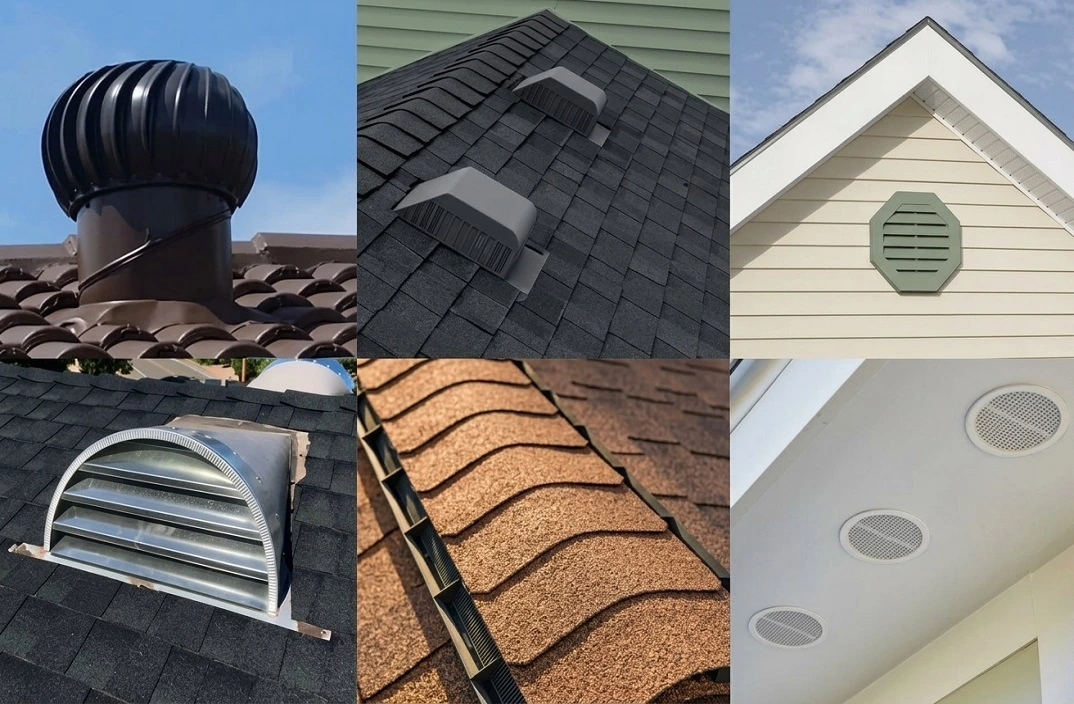
Here are several ventilation types homeowners may encounter:
- Ridge vents: These sit along the highest line of the roof and create an exit for warm attic air.
- Soffit vents: Usually located beneath the roof overhang, these act as intake openings for outside air.
- Gable vents: Set into the triangular wall section beneath a roof peak, they allow air to move through the attic.
- Box vents: These are fixed exhaust openings installed near the upper portion of the roof.
- Turbine vents: Wind turns the turbine, helping pull air out of the attic.
- Powered attic vents: These use a fan to move attic air mechanically.
None of these options automatically suits every house. The roof shape and existing airflow pattern need to be understood first.
How Do Ridge and Soffit Vents Work Together?
Ridge and soffit vents are often discussed together because they can create a continuous airflow path. Air enters through openings near the lower roof edge and moves upward as warmer air rises.
Why Is Proper Vent Placement So Important?
A vent only works within the airflow pattern around it. An exhaust opening placed in one section of a roof may not properly ventilate another enclosed attic area.
A balanced setup gives incoming air a practical route toward an exhaust point. This is one reason adding vents randomly may not solve an attic airflow issue.
Can Roof Ventilation Affect House Temperature?
Ventilation is not a replacement for an air-conditioning system. Its job is to manage the air conditions within the attic.
During hot weather, the roof can transfer heat into the attic. Moving some of that hot air outside can help reduce heat accumulation in that space.
Does Better Airflow Mean a Cooler House?
Not necessarily. House temperature depends on many parts of the building, including insulation, windows, air sealing, outdoor conditions, and the cooling system.
Still, attic ventilation can play a role in how much heat remains beneath the roof. Good airflow can help prevent the attic from becoming a stagnant pocket of very hot air.
What Makes Gable Ventilation Different?
Gable vents use the vertical ends of the roof structure rather than openings along the roof surface. They can allow air to enter or leave through the attic’s gable walls.
When Can Gable Vents Make Sense?
Their usefulness depends heavily on the attic’s shape and the way air can travel through the space. A gable vent may work well in one roof design but have limited effect in another.
This is why a vent should not be judged only by its appearance. Its relationship with the rest of the ventilation system matters.
Are Turbine Vents Different From Static Vents?
Yes. A static vent has no moving parts. A turbine vent uses wind to rotate its blades and assist with exhausting attic air.
Does a Turbine Need Electricity?
No. Wind movement powers the turbine. Its performance can therefore vary with weather conditions and the amount of wind available.
Static vents, meanwhile, depend on natural air movement rather than a mechanical fan.
What Should Homeowners Know Before Changing Roof Ventilation?
Replacing or adding vents should start with an understanding of the existing system. A homeowner may see a few vents and assume the attic needs more, but the real issue could involve intake airflow, vent placement, blocked openings, or the roof’s layout.
Useful details to check include:
- The location of intake and exhaust vents
- The type of vents already installed
- Areas where attic heat seems concentrated
- Signs of excess moisture or condensation
- Whether different attic sections have separate airflow paths
Homeowners who want the existing setup assessed can contact a roofer in Greenwood SC for professional guidance.
Why Does Modern Roofing USA Treat Ventilation as Part of the Roof?
A roof works as a system rather than as a collection of unrelated pieces. Shingles, underlayment, flashing, edges, ventilation, and the attic space all have their own roles.
Modern Roofing USA considers the ventilation arrangement alongside the rest of the roofing system when discussing roof conditions with homeowners. This helps keep the conversation centered on how the roof actually functions instead of simply adding another vent because it looks useful.
Understanding the existing airflow is the first step. The next question is what happens when that airflow is limited, uneven, or poorly matched with the home’s attic design.
What Happens When Roof Ventilation Is Not Balanced?
A roof may have multiple vents but still experience limited airflow when the intake and exhaust openings are not balanced.
For example, a roof may have exhaust vents near the upper section but very little intake ventilation near the lower edge. In that situation, the attic may not receive enough outside air for a steady movement pattern.
Can Blocked Vents Affect Air Movement?
Yes. Dust, insulation, debris, or other obstructions can restrict an opening. When an intake or exhaust path is blocked, the airflow pattern can change.
This is one reason the condition of existing vents matters. Adding another vent may not solve the issue if an existing airflow path is restricted.
How Can Poor Ventilation Affect Moisture?
Heat is not the only concern inside an attic. Moisture can also enter the space through normal household activities. Warm indoor air can carry moisture upward, and that moisture may condense when it reaches a colder surface.
What Signs Can Point to Moisture Problems?
Homeowners may notice:
- Condensation around colder surfaces
- Damp insulation
- Moisture marks
- A musty odor
- Changes in attic wood surfaces
These signs do not automatically prove that ventilation is the cause. Air leaks, insulation conditions, plumbing issues, and other sources can also contribute to attic moisture.
Does Roof Ventilation Matter During Cold Weather?
Yes. Ventilation has a role during colder months as well as during hot weather.
Cold outdoor conditions can create a temperature difference between the home and attic. If warm, moist air reaches cold surfaces, condensation can form.
A suitable ventilation arrangement can help air move through the attic and reduce the amount of moisture-laden air that remains there. Proper insulation and air sealing are also important for the roof system.
How Can Homeowners Tell Which Ventilation System They Have?
Homeowners can often identify visible vent types without entering difficult or unsafe areas. Look at the roofline, gable ends, and underside of the roof overhang.
A basic visual check may reveal:
- A long vent along the roof ridge
- Openings beneath the roof overhang
- Vents on the gable ends
- Raised box-style vents
- Rotating turbine vents
- Fan-powered attic equipment
Seeing a vent is only the starting point. Its function depends on how it works with other parts of the ventilation system.
When Should Roof Ventilation Be Assessed?
Changes in the attic environment can be a reason for a closer look. Unusual heat, recurring condensation, or visible problems around ventilation openings may warrant professional attention.
A ventilation assessment can also make sense during roof repair or replacement, since changes to the roofing system can affect existing airflow paths.
The goal is not simply to add more vents. It is to understand how air enters, moves through, and leaves the attic.
Final Thoughts
Homes use several types of roof ventilation, including ridge, soffit, gable, box, turbine, and powered vents. Each has a different role, and the best arrangement depends on the roof and attic design.
Good airflow can help manage attic heat and moisture, which can also influence house temperature and the overall attic environment. Homeowners should look at the complete ventilation setup rather than judging one vent on its own.
For homeowners planning roofing work or reviewing an existing ventilation system, understanding how the different components work together can make the process much easier. Modern Roofing USA can help homeowners discuss their roof system and the ventilation already present.