A low-slope roof can face a different set of challenges than a steep roof. Rainwater may drain more slowly, sunlight can gradually affect exposed surfaces, and small weaknesses around seams or flashing can become sources of moisture. For commercial buildings, timing roof maintenance properly can help address these concerns before they develop into larger roofing problems.
The right time for roof coating depends on the existing roof’s condition, the coating product, local weather, and the type of roofing system. Applying a coating at the wrong time may affect adhesion, curing, and the finished surface. A careful assessment helps determine if the roof is ready for this work.
Property owners working with a roofing company in Nashville TN, can benefit from understanding their roof’s current condition and the weather expected during coating application. Modern Roofing USA offers roofing services and maintenance options to help property owners address roofing concerns and choose the next step for their roof.
What Is Roof Coating for Commercial Low-Slope Roofs?
Roof coating is a protective liquid-applied material placed over a suitable existing roof surface. After application and curing, it forms a continuous layer designed to protect the underlying roofing system. The exact benefits depend on the coating type, the roof material, and the condition of the surface.
On commercial low-slope roofs, coatings may be used on compatible systems such as certain metal roofs, modified bitumen, or single-ply membranes. Not every coating works with every roofing material, so compatibility must be confirmed before application.
A coating may help protect a suitable roof against weather exposure and surface deterioration. Some reflective products can also reduce the amount of solar heat absorbed by the roof. Still, coating is not a universal solution for leaks, trapped moisture, or damaged roof structures.
What Sets Roof Coating Apart From Roof Replacement?
A coating adds a protective layer over an existing roof that meets the product’s requirements. Replacement removes some or all of the existing roofing system and installs a new one.
Coating may suit a roof that remains structurally sound and has no widespread moisture damage. Replacement may be more appropriate when the roof has extensive deterioration, saturated insulation, or damage that a surface treatment cannot correct.
When Should Roof Coating Be Applied?
The best application period is when the roof is dry, the temperature falls within the product’s specified range, and the weather allows the coating to cure properly. There is no single month that works for every commercial roof.
Property owners should plan around both the roof’s condition and the local forecast. Rain, excessive moisture, unsuitable temperatures, or strong winds can interfere with application and curing.
Is Spring a Good Time for Application?
Spring can offer suitable conditions for coating in some regions. Temperatures may be moderate, and property owners can address roofing concerns before the hottest part of the year.
However, spring rain can interrupt the work. The roofing team needs enough dry time for surface preparation, application, and curing according to the product instructions.
Can Roof Coating Be Applied in Summer?
Summer can be suitable when temperatures remain within the manufacturer’s recommended limits. In some locations, the longer dry periods may help with scheduling.
Excessive heat can also create challenges. A very hot roof surface may affect how a product spreads or cures. Application timing may need to be adjusted around peak temperatures, especially on large commercial roofs with little shade.
Is Fall Suitable for Roof Coating?
Fall may offer moderate temperatures and useful opportunities for maintenance before colder weather arrives. It can be a practical time to address surface deterioration or prepare a suitable roof for seasonal weather.
The main concern is whether enough appropriate weather remains for the coating to cure. Shorter daylight hours, overnight temperature drops, and changing rainfall patterns can affect the work schedule.
Should Roof Coating Be Applied in Winter?
Winter application depends heavily on the climate and the specific coating product. Some products have narrow temperature and moisture requirements that may be difficult to meet in cold conditions.
Cold roof surfaces, frost, condensation, and unexpected rain can affect adhesion or curing. Application should only proceed when the product instructions and site conditions allow it.
What Roof Conditions Must Be Checked Before Coating?
Weather is only one part of the decision. A roof can have ideal application conditions and still be unsuitable for coating.
The existing roof should be assessed for leaks, surface damage, loose seams, deteriorated flashing, and signs of trapped moisture. Drainage areas also need attention because standing water can indicate a problem that should be addressed before coating.
A pre-application assessment generally checks:
- The condition of the existing roofing material
- Seams, joints, penetrations, and flashing
- Drainage paths and areas where water collects
- Signs of moisture within the roofing system
- Surface cleanliness and preparation needs
- Compatibility with the selected coating
Any necessary repairs should be completed before application. Coating over an unresolved leak may hide the visible symptom without correcting the underlying cause.
How Does Weather Affect Commercial Roof Coating?
Weather influences how well a coating can be applied and how it performs while curing. The product label and technical instructions should guide decisions about temperature, humidity, moisture, and expected rainfall.
| Weather condition | Possible effect | Planning step |
|---|---|---|
| Rain | Can disrupt application or curing | Wait for a suitable dry window |
| High heat | May affect application | Follow temperature limits |
| Cold surfaces | Can slow or prevent curing | Check product requirements |
| High humidity | May affect drying | Follow manufacturer guidance |
| Strong wind | Can affect application | Assess site conditions |
The exact limits vary by product. A coating contractor should check the roof surface temperature rather than relying only on the air temperature reported in a weather forecast.
Why Does Roof Preparation Matter Before Application?
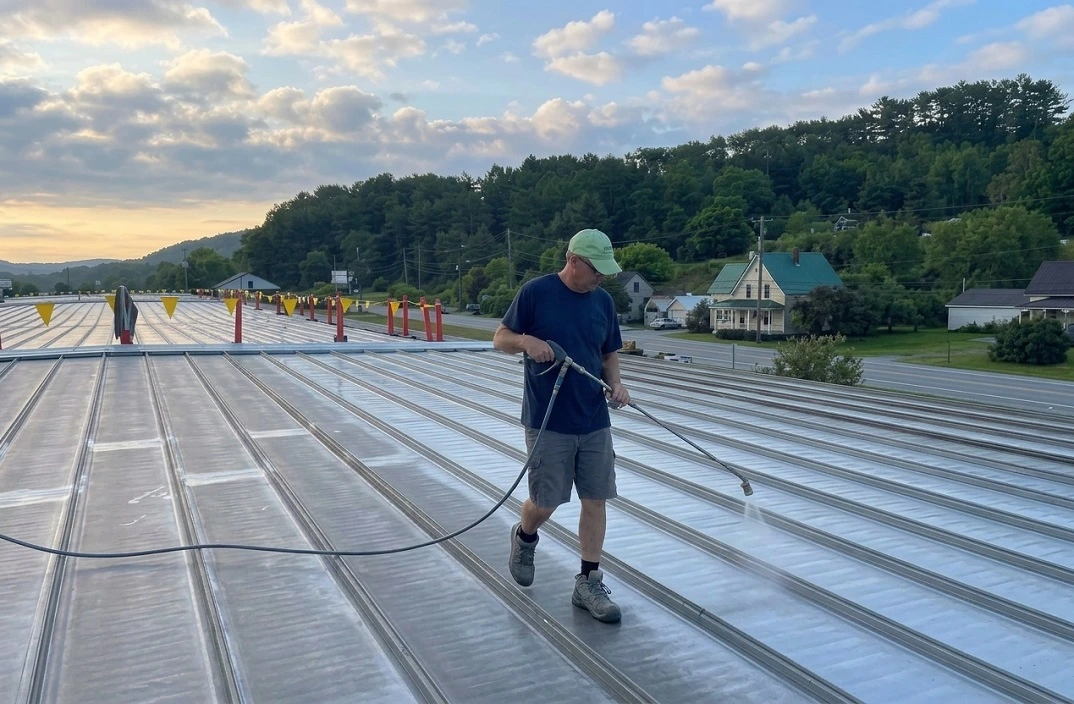
Proper preparation helps a coating bond to the intended surface. Dust, loose material, grease, algae, or other contaminants may interfere with adhesion, depending on the roofing system and product.
The preparation method should match the existing roof. It may include cleaning, drying, repairing damaged areas, treating seams, or applying a compatible primer where required.
The roof must also be checked for moisture-related problems. If water has entered the roofing system, the affected area may need repair or replacement rather than simply receiving another layer.
What Happens When Coating Is Applied Early?
Applying coating before repairs or preparation are finished can reduce its performance. Moisture beneath the surface, incompatible materials, or poorly prepared areas may lead to adhesion problems, blistering, or premature failure.
Waiting until the roof is ready can be more practical than rushing the project to meet a preferred schedule.
How to Choose Between Roof Coating and Replacement
The decision depends on the roof’s age, condition, repair history, and suitability for the chosen coating. A coating may extend the service life of an appropriate existing roof, but it cannot restore every damaged roofing system.
A professional evaluation can show if the roof is suitable for coating. Modern Roofing USA’s maintenance approach includes inspections and attention to issues such as cracked flashing and other minor concerns. For a commercial low-slope roof, the assessment should also address drainage, seams, and signs of moisture beneath the surface.
The comparison below outlines the general differences.
| Consideration | Roof coating | Roof replacement |
|---|---|---|
| Existing roof | Must be suitable | May be badly damaged |
| Project scope | Protective layer | New roofing system |
| Surface repairs | Needed first | Addressed during project |
| Moisture damage | Must be assessed | May require system removal |
| Main purpose | Protect suitable roof | Replace failing roof |
These are general distinctions. The best choice depends on the roof’s condition and the roofing system’s requirements.
How Often Should a Commercial Roof Be Evaluated?
Commercial low-slope roofs benefit from regular inspections because small defects may be difficult to spot across a large surface. Inspections can help identify blocked drainage, loose seams, damaged flashing, and other issues that need attention.
Modern Roofing USA offers semi-annual maintenance visits, with inspections and minor repairs where appropriate. The right inspection schedule for a commercial building also depends on the roofing material, building use, weather exposure, and any recommendations from the roof manufacturer.
After severe weather or when a leak appears, an additional assessment may be necessary rather than waiting for the next scheduled visit.
What Should Property Owners Ask Before Scheduling Roof Coating?
Before agreeing to the project, property owners should ask whether the existing roof is suitable for coating, which product is proposed, and what preparation or repairs are required.
It is also useful to ask about the expected application conditions, curing time, warranty terms, and any maintenance requirements after completion. For an occupied commercial building, the contractor should explain how the work may affect access or daily operations.
Clear answers help property owners understand what the coating is expected to do and what it cannot correct. They also help set realistic expectations about project timing and future roof maintenance.
Final Thoughts
The right time to apply roof coating is when the existing commercial low-slope roof is suitable, the surface is properly prepared, and weather conditions meet the product’s requirements. Spring, summer, and fall may all offer suitable windows, while winter work depends on local conditions and the coating specifications. A careful assessment should always come before scheduling the application.
Modern Roofing USA Reviews can offer another source of customer feedback when property owners research roofing services. Combining that research with a professional roof assessment can help clarify whether coating, repairs, or replacement is the more suitable next step for a commercial building.